
Skills Gap Analysis: How It Works and Why It Matters for Growing Teams
Skills gap analysis helps organizations understand the difference between the skills they have today and the skills they actually need to achieve their goals. Instead of relying on assumptions or outdated role descriptions, teams gain a clear and structured view of where they are strong and where they are exposed.
When done right, skills gap analysis becomes a practical decision making tool that supports growth, reduces risk, and improves employee engagement.
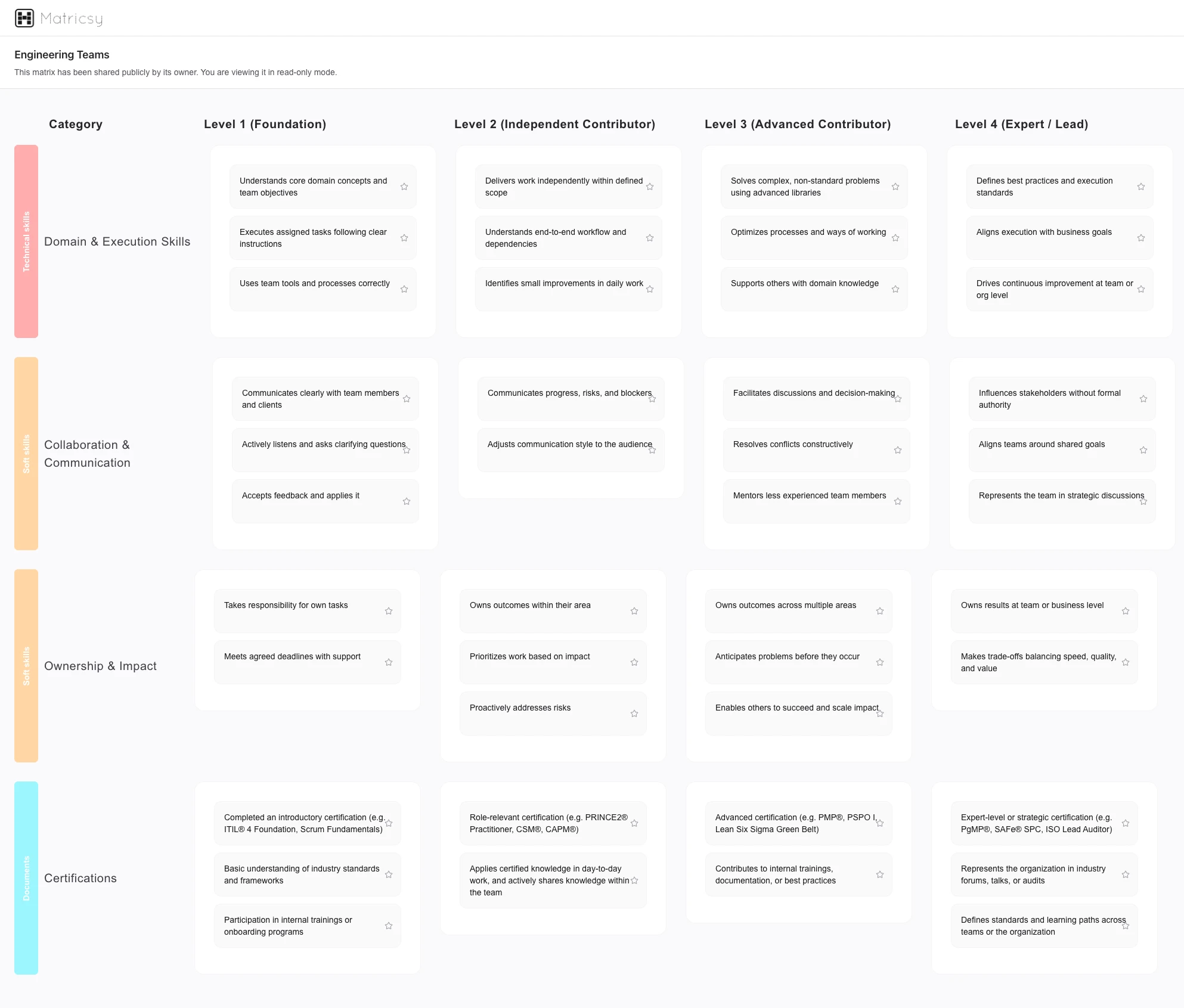
Example of a competency matrix - visual representation of engineering team skills
How Skills Gap Analysis Works
At its core, skills gap analysis compares three elements:
- required skills for roles, teams, or future plans
- current skills available in the organization
- the gap between them
With Matricsy, this process is visual and data driven. Skills are mapped across individuals and teams, making gaps immediately visible. Managers can quickly see which competencies are missing, which are underrepresented, and which depend on single people.
Instead of static documents, skills gap analysis becomes a living system that evolves together with the team.
The Business Value of Skills Gap Analysis
- Better Decisions Based on Real Data
Without skills gap analysis, development plans and hiring decisions are often based on intuition. This increases risk and leads to misaligned investments.
Skills gap analysis provides clarity. Leaders can prioritize development efforts, plan hiring with confidence, and align skills with business goals.
- Reduced Delivery and Operational Risk
Unidentified skill gaps often surface at the worst possible moment. During critical projects, rapid growth, or unexpected changes.
By identifying gaps early, organizations reduce dependency on single individuals, prevent bottlenecks, and protect delivery quality before problems appear.
Impact on Employees and Retention
- Clear and Meaningful Development Goals
Employees are more engaged when they understand what is expected of them and how they can grow. Vague feedback and generic training plans often lead to frustration and disengagement.
Skills gap analysis enables well defined and relevant development goals. Employees see exactly which skills matter and why, making growth plans more motivating and achievable.
- Higher Satisfaction and Lower Turnover
When development is aligned with real skill gaps, employees feel invested in and supported. This increases job satisfaction and reduces the risk of attrition.
Better skilled employees perform better, feel more confident in their roles, and are more likely to stay with the company long term.
Why Skills Gap Analysis Is a Win for Both Sides
For the company, skills gap analysis means stronger teams, lower risk, and smarter growth decisions.
For employees, it means clarity, fair expectations, and meaningful development.
This balance is what makes skills gap analysis one of the most effective tools for building sustainable and resilient teams.