
Employee Skills Matrix: How It Works and Why It Matters for Growing Teams
As teams grow, skills become harder to track and easier to misunderstand. Information is scattered across documents, tools, and personal knowledge. Different managers hold different views, and no one is fully confident which data is up to date.
An employee skills matrix solves this problem by creating a single shared view of team capabilities. It helps organizations understand who can do what, where strengths exist, and where gaps require attention before they impact performance, delivery, or growth.
What Is an Employee Skills Matrix
An employee skills matrix is a structured way to map skills across individuals and teams. It shows which competencies are present, which are developing, and which are missing.
Instead of relying on spreadsheets or informal knowledge, teams gain a clear and consistent overview of real capabilities that can be used in daily decision making.
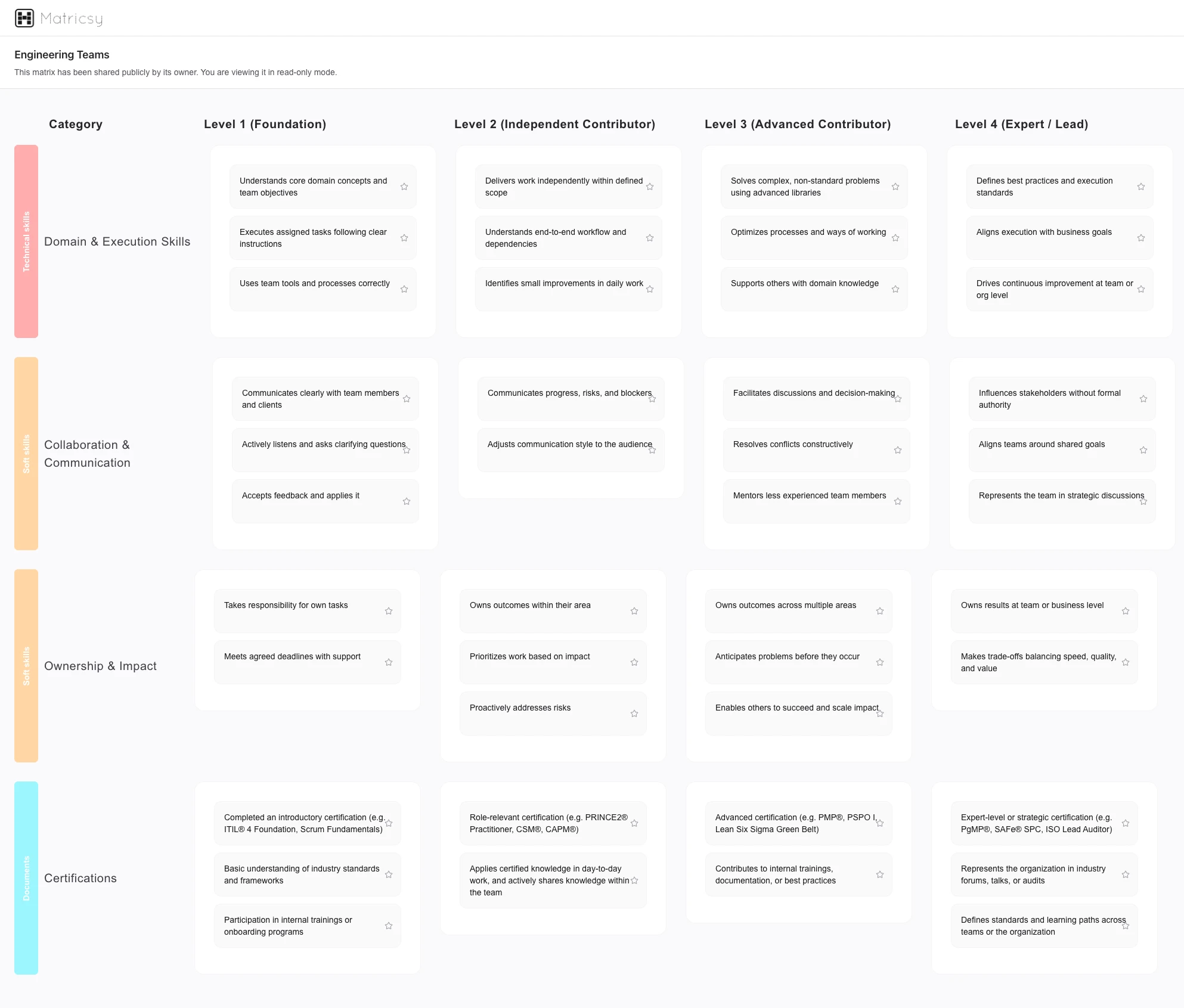
Example of an employee skills matrix - visual representation of team competencies
The Problem With Scattered Skills Information
When skills live in different tools and documents, there is no single source of truth. Managers operate with partial knowledge, teams are misaligned, and trust in the data is low.
Matricsy centralizes skills in one shared employee skills matrix. Everyone works with the same current view of team capabilities, removing confusion and improving alignment across the organization.
Why Decisions Based on Assumptions Create Risk
Project staffing, promotions, and hiring decisions are often based on assumptions rather than evidence. This increases dependency on individuals and leads to avoidable mistakes.
With an employee skills matrix, skills are visible and comparable. Decisions are based on real data about capabilities, not gut feeling, which significantly reduces operational and delivery risk.
How an Employee Skills Matrix Reveals Team Strengths
Managers often struggle to quickly identify who is ready for more responsibility or which skills are strong within the team. Without clear visibility, potential remains hidden and opportunities are missed.
A clear skills matrix makes strengths easy to spot. Managers gain instant clarity on who can support critical work, mentor others, or step into more advanced roles.
How an Employee Skills Matrix Supports Structured Development
Development conversations often feel vague and subjective. Employees do not know what to focus on, and managers struggle to give concrete guidance.
An employee skills matrix provides a shared reference point for growth discussions. Development goals become specific, measurable, and aligned with both team needs and individual ambitions.
Data Driven 1on1 and Performance Reviews
Without clear data, 1 on 1 meetings and performance or yearly reviews often feel subjective. Feedback is inconsistent, expectations are unclear, and both sides leave conversations frustrated.
An employee skills matrix brings objectivity into these discussions. 1 on 1 and performance reviews are based on visible skills and agreed expectations, making conversations more concrete, fair, and productive for managers and employees alike.
Why Clear Skills Visibility Increases Engagement and Retention
When employees clearly see which skills matter and what they need to develop next, motivation increases. Growth feels achievable and purposeful instead of unclear and overwhelming.
Well defined development goals lead to higher engagement, stronger performance, and better retention. Employees feel invested in and supported, while organizations benefit from more capable and committed teams.
Why an Employee Skills Matrix Matters for Growing Teams
As teams scale, visibility usually decreases. Leaders lose confidence that the organization has the skills required to support future plans.
An employee skills matrix maintains transparency as teams grow. It reduces risk, supports intentional development, and enables confident scaling without sacrificing quality or delivery.